Embarking on the journey of novel writing is an exhilarating endeavor, but the real magic happens during the editing phase. Editing is where your manuscript transforms from a rough draft into a polished masterpiece. To guide you through this critical process, here’s an 8-step checklist that will help you refine your novel and bring out its full potential.
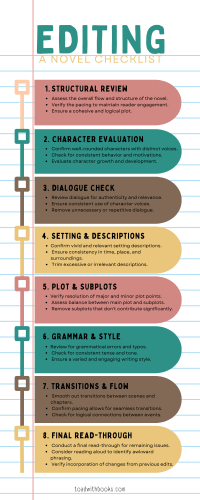
Step 1: Structural Review
The foundation of a compelling novel lies in its structure. Start by assessing the overall flow and organization of your narrative. Check for pacing issues that might affect reader engagement, ensuring a cohesive and logical plot. This step lays the groundwork for an engaging and well-structured story.
Step 2: Character Evaluation
Characters are the heart of any novel, and they should be as dynamic and authentic as possible. Confirm that each character is well-rounded, possessing distinct voices and consistent motivations. Evaluate their growth throughout the story, ensuring a satisfying and believable character arc.
Step 3: Dialogue Check
Dialogue breathes life into your characters and advances the plot. Review your dialogue for authenticity and relevance. Ensure that each character maintains a consistent voice, and eliminate any unnecessary or repetitive conversations. A crisp and purposeful dialogue enhances the overall reading experience.
Step 4: Setting and Descriptions
Transport your readers into the world you’ve created by confirming vivid and relevant setting descriptions. Ensure consistency in details related to time, place, and surroundings. Trim any excessive or irrelevant descriptions that might distract from the core narrative, keeping the focus on the essential elements.
Step 5: Plot and Subplots
A well-crafted plot is a key driver of reader engagement. Verify the resolution of major and minor plot points, maintaining a balance between the main plot and subplots. Remove any subplots that don’t significantly contribute to the overall story, streamlining the narrative for maximum impact.
Step 6: Grammar and Style
Polish your prose by conducting a thorough review for grammatical errors and typos. Check for consistent tense and tone, ensuring a smooth and enjoyable reading experience. Cultivate a varied and engaging writing style that aligns with the tone of your novel.
Step 7: Transitions and Flow
Smooth transitions are the glue that holds your story together. Ensure that scene and chapter transitions are seamless, contributing to the overall flow of the narrative. Check for logical connections between events, maintaining coherence and preventing any jarring disruptions to the reader’s experience.
Step 8: Final Read-Through
The finishing touch to your editing journey is a final read-through. Take the time to identify any remaining issues, read your manuscript aloud to catch awkward phrasing, and confirm that all changes from previous edits have been seamlessly incorporated. This step ensures that your novel is polished to perfection before it reaches the hands of readers.
Editing a novel requires time, dedication, and a keen eye for detail. By following this 8-step checklist, you’ll navigate the editing process with confidence, transforming your manuscript into a literary work that captivates and resonates with your audience. Remember, the journey from draft to masterpiece is a rewarding one, and each edit brings you one step closer to realizing your vision as an author. Happy editing!
 Toad with Books
Leave a comment