
The Soul of Your Story
Welcome, fellow writers, to a journey into the heart of storytelling—character development. Creating memorable protagonists and antagonists is an art form that elevates a narrative from good to unforgettable. In this blog post, we’ll explore an 8-point checklist to guide you in mastering the craft of character development.
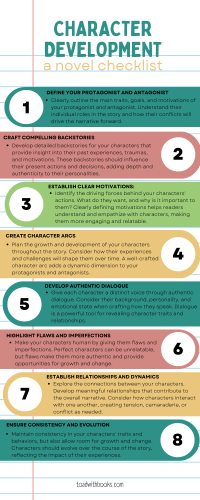
Define Your Protagonist and Antagonist: Building Foundations
Before pen meets paper, take the time to clearly define your protagonist and antagonist. Who are they? What drives them? Understanding their roles in the story sets the stage for a compelling narrative.
Craft Compelling Backstories: The Tapestry of Lives
Backstories are the threads that weave the tapestry of your characters’ lives. Delve deep into their pasts, exploring experiences, traumas, and pivotal moments that shape who they are today. A well-crafted backstory adds layers of complexity and authenticity to your characters.
Establish Clear Motivations: The Driving Force
Motivations propel characters forward, giving purpose to their actions. Identify what your characters want and why. Clear motivations not only guide their decisions but also help readers connect with and invest in their journeys.
Create Character Arcs: The Evolution of Being
Every character should undergo a transformation throughout the story. Plan their arcs carefully, considering how experiences and challenges will mold them. A well-developed character arc adds depth and resonance to your protagonists and antagonists alike.
Develop Authentic Dialogue: Voices in Harmony
Characters come to life through dialogue. Craft authentic conversations that reflect their personalities, backgrounds, and emotional states. A unique voice for each character adds realism and enhances the reader’s connection to the narrative.
Highlight Flaws and Imperfections: Embracing Humanity
Perfect characters are forgettable. Embrace the flaws and imperfections that make your characters human. These vulnerabilities not only make them relatable but also provide opportunities for growth and self-discovery.
Establish Relationships and Dynamics: The Web of Connections
Characters don’t exist in isolation. Explore the relationships between your characters, be it camaraderie, conflict, or complex dynamics. Meaningful connections contribute to the richness of your narrative.
Ensure Consistency and Evolution: Balancing Acts
Strive for consistency in your characters’ traits and behaviors, but allow them to evolve. Characters should mirror the impact of their experiences, growing and changing organically as the story unfolds.
Bringing Characters to Life
As you embark on your writing journey, remember that characters are the soul of your story. Mastering the art of character development transforms your narrative into a living, breathing world that captivates readers and leaves a lasting impression. Follow this 8-point checklist, and may your characters linger in the minds of your readers long after they’ve turned the final page. Happy writing!
 Toad with Books
Leave a comment