Welcome, aspiring novelists and seasoned writers alike! Crafting a compelling and well-structured novel is no small feat, and one of the essential tools in your writer’s toolkit is a solid plotting strategy. In this blog post, we’ll delve into an 8-step checklist to guide you through the intricate process of plotting your novel effectively.
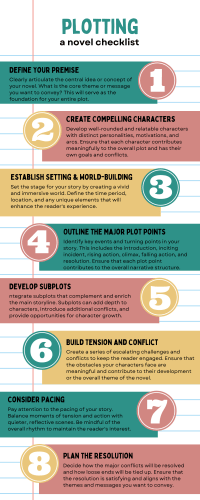
Define Your Premise
At the heart of every great novel is a captivating premise. Before diving into the intricacies of your plot, take the time to clearly articulate the central idea or concept of your story. What themes or messages do you want to convey? This premise will serve as the anchor for your entire narrative.
Create Compelling Characters
Characters breathe life into your story, and crafting memorable, relatable characters is crucial. Develop well-rounded individuals with distinct personalities, motivations, and arcs. Ensure that each character contributes meaningfully to the plot, driving it forward with their unique goals and conflicts.
Establish Setting and World-Building
Transport your readers to a vivid and immersive world by carefully crafting the setting of your novel. Define the time period, location, and any unique elements that will enhance the reader’s experience and contribute to the overall atmosphere of your story.
Outline the Major Plot Points
A well-structured novel follows a narrative arc with key plot points. Identify and outline the major events, from the introduction and inciting incident to the climax and resolution. Each plot point should propel the story forward and contribute to the overall narrative structure.
Develop Subplots
Elevate your novel by incorporating meaningful subplots. These side stories should complement and enrich the main narrative, providing depth to your characters, introducing additional conflicts, and offering opportunities for character growth and development.
Build Tension and Conflict
Tension and conflict are the lifeblood of a gripping novel. Create a series of escalating challenges that keep your readers eagerly turning pages. Ensure that each obstacle faced by your characters is meaningful and contributes to the overarching themes of your work.
Consider Pacing
Pacing is a delicate art that can make or break a novel. Pay close attention to the rhythm of your story, balancing moments of tension and action with quieter, reflective scenes. A well-paced novel keeps readers engaged and invested in the journey.
Plan the Resolution
As you near the conclusion of your novel, carefully plan how major conflicts will be resolved. Tie up loose ends in a satisfying manner that aligns with the themes and messages you want to convey. A strong resolution leaves a lasting impression on your readers.
Armed with this 8-step checklist, you’re ready to embark on your novel-writing journey. Remember, while a structured approach is essential, allow room for creativity and unexpected twists. Happy plotting, and may your novel captivate readers for generations to come!
 Toad with Books
Leave a comment